China · East Asia · City Guide
Shanghai
Where the Huangpu river splits the city in two: art-deco arcades on one bank, glass towers on the other — and a thousand hidden lanes in between.
Scroll
Where the Huangpu river splits the city in two: art-deco arcades on one bank, glass towers on the other — and a thousand hidden lanes in between.
A curated selection of the cafés, ateliers and quiet corners that locals keep to themselves — beyond the Bund, beyond the tourist trail.
A small back-lane specialty roaster on Wujiang Lu — beloved by local heads, founded by a Korean-American expat. Single-origin pours, brown-sugar lattes, no fuss.
A speakeasy hidden behind a sliding bookshelf in a mahjong parlour. Dark, low-lit, ceiling lined with Japanese washi-paper boxes — Asia's 50 Best for a reason.
The most beautiful plane-tree street in the French Concession. Independent boutiques, cafés like %Arabica and Egg, and a Sunday morning that feels like another century.
A 1933 art-deco slaughterhouse by British architect Balfours, now a brutalist exhibition complex — concrete bridges, animal ramps, the most photographed staircase in Hongkou.
Craig Willis's no-menu, daily-changing Australian-Mediterranean kitchen above a corner store on Anfu Lu. Chalkboard dishes, copper pendants, the most relaxed lunch in the city.
The Chinese collectible-toy giant's Shanghai flagship — three storeys of MOLLY, SKULLPANDA and Labubu, fronted by a giant 3D figure on the façade. Tourist-magnet by day, locals-only after eight.
Morning dumplings, an afternoon in the lilong lanes, sunset over the Bund — one route, ten stops, twelve hours.
An ideal one-day itinerary built around the rhythm Shanghai actually keeps: the city starts slow, peaks at golden hour, and only really opens up after dark. Below: the full timeline with travel times between each stop.
A counter-only xiaolongbao spot two minutes from People's Square. Order the crab-and-pork basket, eat standing, leave before the line forms.
A five-hundred-year-old Ming-dynasty garden of pavilions, koi ponds and rockeries — get there at opening to have the courtyards almost to yourself.
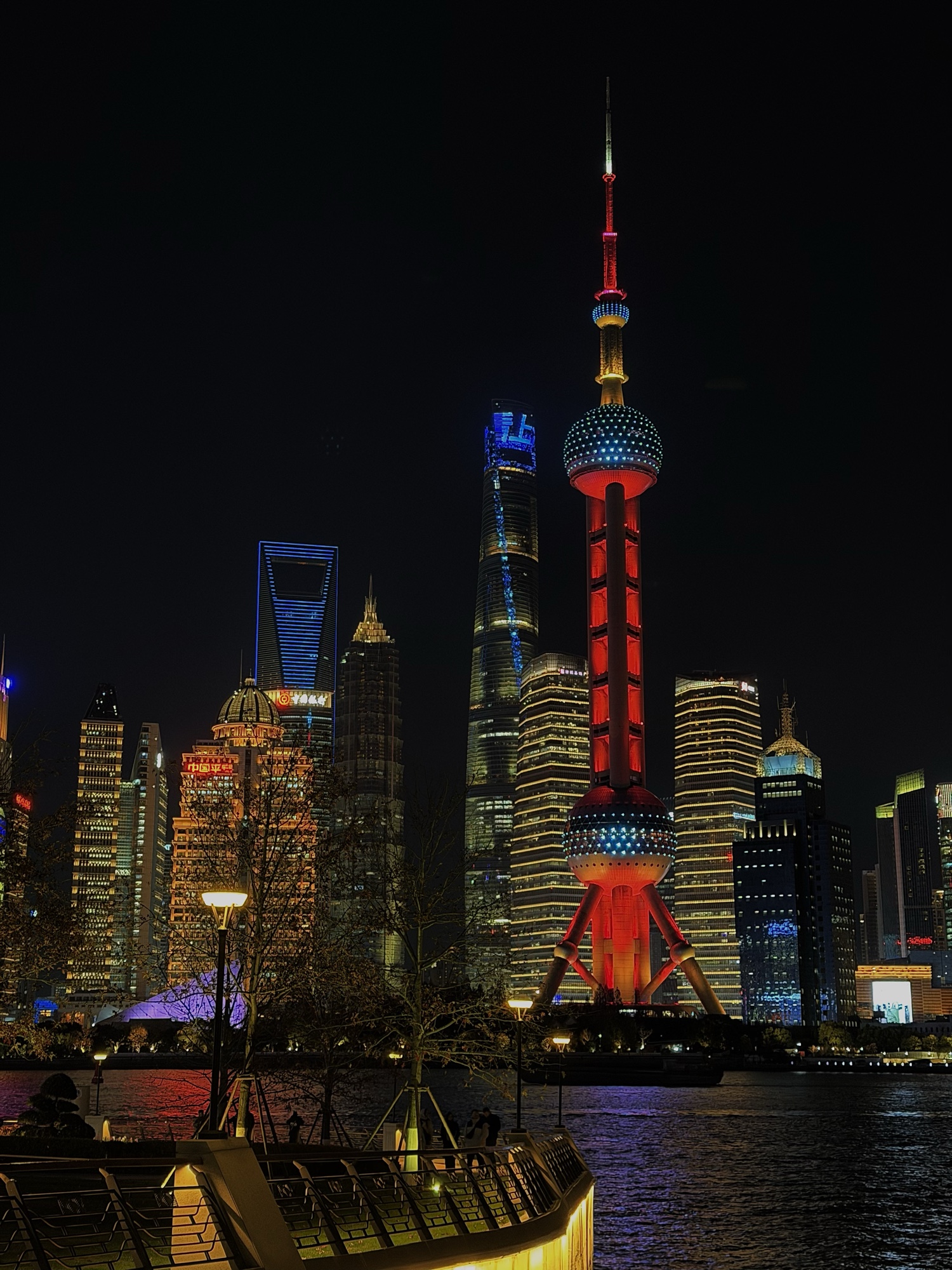
Walk the promenade with the colonial banks on your left and Pudong's glass skyline across the Huangpu. Best photographed from the Waibaidu Bridge end.
Either Lost Heaven for Yunnan cuisine in a former missionary house, or RAC bar for a quiet plateau under plane trees.
A maze of restored shikumen lane houses turned into independent shops, ateliers and coffee bars. Touristy on the main artery, quietly artisanal one alley over.
The Kyoto-born coffee bar set against the golden Jing'an Temple — get the iced Kyoto blend, sit on the steps, breathe before the evening starts.
Bar Rouge above the Bund 18 is the postcard — but Heritage by Madison on the eighth floor of the Peninsula has the calmer view and the better negroni.
Paul Pairet's playful French brasserie on the sixth floor of Bund 18. Open until 2 am — ask for a window table when you book.
A four-floor speakeasy behind a vintage bar-tool shop in Xintiandi. Push the bookshelf on the second floor to find the third bar. Tokyo-trained bartenders, no menu.
A bowl of scallion-oil noodles or pork wontons at any of the late-night vendors along Yunnan South Road — the city's true closing ceremony.
Long-form essays, neighbourhood guides and the occasional history lesson — the kind of writing that takes you below the surface of the city.
From the British Consulate of 1873 to the HSBC dome and the Cathay Hotel, the mile-long curve of stone facades on the Bund tells the story of a city built from twelve banking powers and never quite handed back to any of them. A walking essay through the names, dates and quiet rivalries that built the most recognisable skyline in modern China.
Read moreWhy the city's grey-brick 1920s lane-houses became the last battleground between developers and preservationists — and which lilong still survive intact.
The 1930s jazz halls of Shanghai gave birth to a sound that would conquer the Sinophone world — and the EMI building on Hengshan Road is still standing.
Hangzhou, Suzhou, Wuxi — the water-towns and gardens an hour from Shanghai that built the city's idea of beauty long before there was a Bund.
From a Ming-dynasty estate an hour outside the city to a power-plant turned design hotel on Nanjing Road — four addresses that define modern Shanghai luxury.
Thirteen Ming-dynasty courtyard houses transplanted stone-by-stone from Jiangxi and rebuilt inside a 100-acre camphor forest. The most ambitious resort Aman has ever opened.
Fifty-five restored shikumen lane-houses inside the city's last intact lilong. Each villa has its own butler, garden and front door — Shanghai's only true lane-house hotel.
Art-deco grandeur at the head of the Bund — the only new building permitted on the historic waterfront in seven decades. Sir Elly's rooftop has the city's best view of Pudong.
Antonio Citterio's Italian masterpiece on the banks of Suzhou Creek — anchored by the restored 1916 Shanghai Chamber of Commerce. Black-marble bathrooms, a 20-metre spa pool, Il Ristorante by Niko Romito.
Not one of the four featured? Tell us where you'd like to stay — Mandarin Oriental Pudong, The PuLi, Waldorf Astoria on the Bund, Six Senses Qing Cheng, or any other address — and we'll arrange the reservation for you.
From speakeasies hidden behind bookshelves to riverside megaclubs — where Shanghai actually opens up after midnight.
The largest luxury club in Shanghai — a Hollywood-scale production with rotating headliners, bottle parades and the city's loudest LED wall.
Six clubs stacked into one tower — each floor with its own booth, its own genre, its own crowd. Hip-hop on one, techno on another, K-pop and KTV upstairs.
The institution. Inside Found 158, Arkham has run residencies and one-night-stands with the heaviest names in techno since 2014 — Funktion-One sound, no nonsense.
A small, audiophile-grade listening club tucked behind an unmarked door — the place where local heads go when the bigger rooms feel too obvious.
Shingo Gokan's four-floor cocktail concept — Sip & Guzzle, Sober Society, The Odd Couple — built into a Shintori-style brutalist shell. Voted Asia's best year after year.
In 2002, the entrepreneur Ma Dadong rescued fifty Ming-dynasty courtyard houses from the path of a planned reservoir in Jiangxi province. He moved each one — stone by stone, beam by beam — over a thousand kilometres east, and replanted them inside a 100-acre camphor forest on the outskirts of Shanghai.
Aman opened the resort in 2018 inside that forest. Twenty-six pool villas were built new in the Aman idiom — low, quiet, Kerry Hill — while thirteen of the original Ming villas were restored as private residences. The spa is the largest Aman has ever built. There is a Nan Shu Fang scholar's pavilion, a lakeside tea house, and a courtyard for morning tai chi.
It is the only place in China where you can sleep inside an Antique without a museum's velvet rope between you and it.
Send a non-binding enquiry. We forward it directly to the hotel's reservations desk and reply within 24 hours.
In the heart of the French Concession sits Jian Ye Li — the last fully intact shikumen lilong in Shanghai. Built in 1930 as a private residential development, these grey-brick lane-houses were saved from demolition and meticulously restored over nine years.
Capella took fifty-five of them and turned each into a stand-alone villa: its own front door from the lane, its own private courtyard, its own butler. The Auriga Spa runs the indoor swimming pool framed by arched warehouse windows. Le Comptoir de Pierre Gagnaire serves classic French in a former missionary's house with the Pierre Yovanovitch chairs and Bourgeois flowers.
It is the only address in Shanghai where you sleep inside the city's pre-war architecture rather than behind a glass curtain wall above it.
Send a non-binding enquiry. We forward it directly to the hotel's reservations desk and reply within 24 hours.
For seventy years the Shanghai government did not permit a single new building on the Bund. In 2009, that rule was broken once — for The Peninsula. The result is an art-deco volume that picks up the rhythm of the Cathay and the HSBC building beside it, conceived by David Beim of Hirsch Bedner so faithfully that most guests assume it has stood there since 1929.
Inside: 235 of the largest rooms in Shanghai, every one with a view either of Pudong's glass skyline or the heritage Bund. The lobby tea ritual is the city's oldest. Sir Elly's, on the 14th floor, has the best terrace view of the Pudong skyline in town — telescope included.
The 25-metre indoor pool sits beneath a stained-glass canopy. The spa runs the original Peninsula Page Boy service: a uniformed page will deliver anything, anywhere, at any hour.
Send a non-binding enquiry. We forward it directly to the hotel's reservations desk and reply within 24 hours.
Bulgari's eighth hotel sits at the corner where Suzhou Creek meets the Bund — anchored by the meticulously restored 1916 Shanghai Chamber of Commerce, which now houses Bulgari Bar, Il Ristorante and Il Cioccolato. The new tower behind it, designed by Antonio Citterio Patricia Viel, rises 48 floors above the river.
The interior language is unmistakably Italian: chocolate-brown leather, black-marble bathrooms with chequerboard floors, brass detailing, custom Maxalto furniture and B&B Italia in every room. Il Ristorante is led by three-Michelin-starred Niko Romito; the Bulgari Spa wraps a 25-metre indoor pool in a tunnel of warm-wood slats.
It is the city's most explicit statement of European luxury transplanted — a Roman address built into a Chinese skyline.
Send a non-binding enquiry. We forward it directly to the hotel's reservations desk and reply within 24 hours.
TAXX sits where M2 used to — and turned what was already Shanghai's flashiest big-room into something louder, taller and more aggressively glamorous. The LED wall behind the booth runs three storeys. The bottle parades roll out on illuminated trays. The crowd shows up dressed.
Programming leans hip-hop, EDM and Mandopop hits — with regular headliner takeovers from international names. Reserve a table well in advance: walk-ins on a Saturday will spend the night in the queue, not inside.
Best seen from a high table on the second balcony, ideally before midnight when the room still has room.
INS is what happens when you take Shanghai's appetite for scale and stack it on top of itself: a six-storey entertainment tower on Nanjing West Road where every floor is a different club. Hip-hop on one, big-room EDM on another, a Latin-trap room, a KTV floor, a rooftop lounge — each with its own booth, its own door staff, its own crowd.
The whole building runs as one organism: a single wristband moves you up and down between floors. The lifts are slow on a Saturday — most people just climb. The most ambitious group will hit three floors before the night is over and have completely forgotten which one they came in through.
If you only do one mega-club in Shanghai and don't know which genre suits the night yet, this is the room — because it's six rooms.
Inside the Found 158 sunken food court — past the noodle counters and the natural-wine bar — sits a black door that opens into the city's most uncompromising room. Arkham has been programming techno residencies since 2014, longer than most of its dancers have been clubbing.
The Funktion-One rig is dialled in for clarity, not volume. The crowd is locals plus visiting heads who heard from someone where to go. Resident night every Friday; international headliners most Saturdays — Floating Points, Charlotte de Witte, Marcel Dettmann have all played here.
Doors at midnight. Best arrived around two.
ALL is what Shanghai's underground built when it got tired of the warehouse format. A small, audiophile-tuned listening room with a custom-built sound system, no dance floor lighting to speak of, and a residency programme that books names you only know if you actually follow this music.
The crowd is a mix of label heads, producers and very serious listeners. Drinks are quiet — a short menu, well-built. Phones discouraged. There's no door policy as such, but the door is unmarked, and you'll need the address.
When ALL has the right name behind the booth, it is the best room in Asia.
Shingo Gokan's multi-concept cocktail destination on Xinle Road is a category-defying address: four floors, three bars and a restaurant, each with its own concept. Sip & Guzzle on the ground floor for fast-served classics. Sober Society for the technical-cocktail flagship. The Odd Couple on the top floor — speakeasy-style, by appointment.
The whole thing is built into a Shintori-style brutalist concrete shell — exposed, dark, unfinished. Sober Society has held a fixture in Asia's 50 Best Bars list since the year it opened.
Not a dance club. The most serious cocktail address in the city.